Full fibre broadband: clear signals, a simple guide to live VHF monitoring in Pembrokeshire
Full fibre broadband from Voneus keeps Letterston’s live VHF map running smoothly. Strong upload, low latency and steady reliability turn a simple home station into a real-time window on radio conditions across Pembrokeshire, with clear steps so you can try the same tidy setup at home.
10th February 2026
VHF tech powered by full fibre broadband in Pembrokeshire
In Letterston, Pembrokeshire, a small home station shares live VHF (very high frequency) radio conditions so anyone can see, on a simple web page, when signals travel further than usual. It works smoothly because the connection behind it is steady, fast and has strong upload: Voneus full fibre broadband.
The idea, simply
Think of radio range like throwing a pebble. How far it goes depends on the pebble, your throw, the wind and what is in the way. Radio is similar. VHF, around 30 to 300 MHz, usually reaches “line of sight”, often up to a hundred kilometres. Some days it travels much further thanks to nature, with brief bounces off meteor trails, paths formed by warm settled air over the sea, and even reflections from the Moon. If you remember summer evenings when old TVs caught extra channels, you have seen the effect.
The Letterston station turns these changes into a live picture. When the range stretches, the map shows it within seconds. When things calm down, the picture settles. No jargon, just a clear view you can check at a glance.
The person behind it
Letterston resident Andy Adams is a retired Merchant Navy Chief Engineer. Years at sea using a small amateur-radio setup sparked a lifelong interest in how signals travel, especially on VHF. That background means tidy engineering, patience and good timing.
Why Andy built it
See conditions live, not later. If the band is open, people can act right away.
Share the experience. A simple web page lets clubs, schools and neighbours follow along with no special kit.
Show what modern connectivity enables. With full fibre broadband, a quiet home can feed reliable data to the whole community.
Why it matters locally
Live propagation maps are useful well beyond the radio hobby. Schools can use them for quick science demos. Local groups can spot unusual events that often arrive with weather changes or bursts of solar activity, great conversation starters that bring people together. Because it runs in any browser, anyone with an internet connection can watch. The local feed also helps national and international datasets build the bigger picture above us.
How the station works, in plain terms
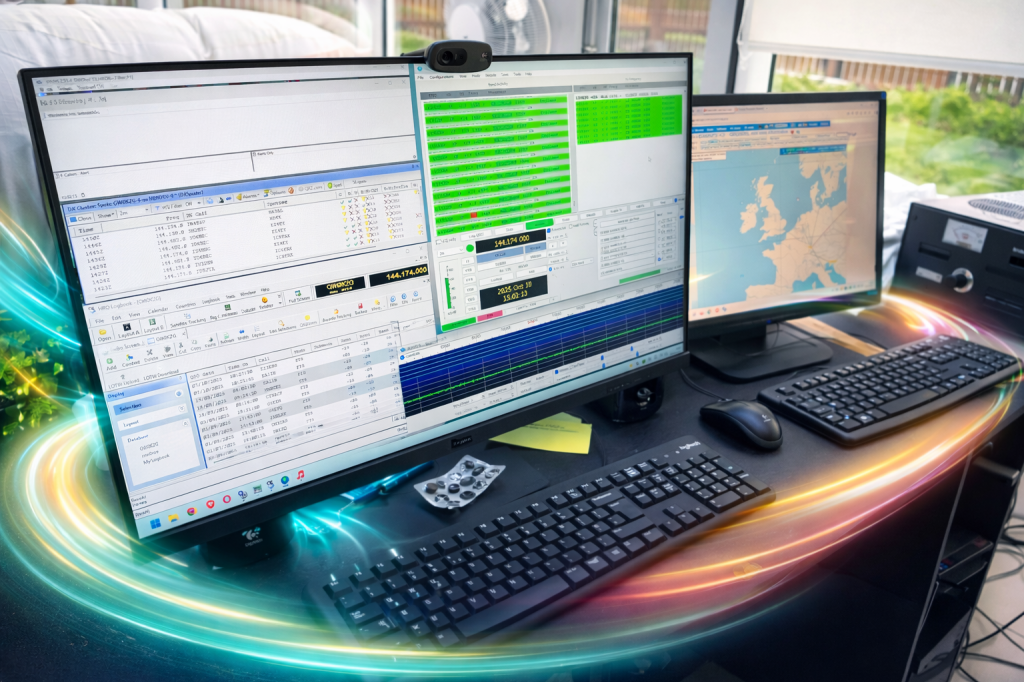
An aerial on the house collects radio signals.
A small receiver (a software-defined radio) turns those signals into data for a PC.
The PC checks what is being heard, stamps the time accurately, and shows a clear on-screen view.
Tiny updates go to shared servers, so a public map refreshes in real time.
A small battery keeps it tidy through short power cuts. The whole chain restarts cleanly if needed.
This feels effortless because the connection behaves well. With full fibre broadband, upload is strong, and latency is low and predictable, so updates leave immediately and line up cleanly with data from other stations. The result is a calm, reliable picture for anyone who wants to look.
Why full fibre broadband makes a difference
Full fibre gives the station three quiet superpowers:
Low latency keeps timing sharp, so maps from different places make sense together.
Strong, symmetrical upload means tiny updates do not get stuck behind video calls or streaming at home.
Stability keeps the service running day and night, so you do not miss openings.
It is also less affected by electrical noise than old copper lines, which helps the receiver hear weak signals more clearly.
What we are seeing so far
Recent highlights include long-distance contacts on 144 MHz to the Cape Verde Islands, just over four thousand kilometres, and regular meteor-scatter contacts around sixteen hundred kilometres. These are the kinds of events a live map can reveal as they happen.
Try something similar at home
You do not need a room full of gear. A sensible aerial, a widely used SDR receiver and a wired connection from PC to router will get you started. Keep the computer’s time accurate and, if full fibre broadband is available, use it for steady upload and low delay. Add a small uninterruptible power supply to ride out brief outages. Aim for a quiet, dependable setup that looks after itself.
Worried about switching?
Plenty of people hesitate because they fear downtime or hassle. That is normal. With Voneus, you can reserve a deal for up to 11 months, run both connections during changeover, and get one month free to make sure everything works before you leave your old supplier.
Letterston price comparison, simple local view
Area: Letterston, Pembrokeshire (SA62)
Contract length shown: 18 months (Voneus)
Install: Standard installation is free with Voneus.
Note: Competitor figures below are indicative UK rural FTTC and 4G ranges. They vary by provider and deal. Please validate with current local tariffs before publishing.
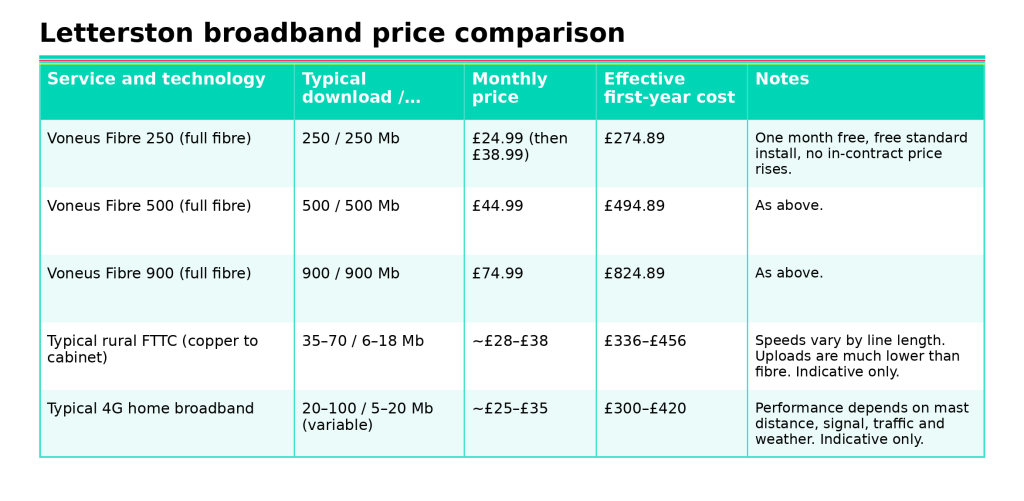
* Prices are per month. Promotional pricing varies. Prices gathered from publicly published online sources. ** Effective first-year cost assumes one month free with Voneus and 11 paid months at the package price shown. *** 18-month total assumes 17 paid months at the package price (one month free).
Why this matters for live VHF
Accuracy improves with low, stable latency and fast upload. Full fibre delivers both. FTTC and 4G often have higher latency and lower uploads, so updates can lag or bunch, which makes the live picture less precise.
Checking availability and next steps
If you want smooth streaming, reliable working from home, or a tidy citizen-science project like this, switching is simple. Check your address to see available speeds: 250, 500 or 900 Mb. Enjoy free standard installation, one month free, no in-contract price rises, and the option to reserve your deal for up to 11 months if you are still in contract. Join the switch to better broadband.